Monday, June 29, 2020

Rwanda Demands Explanations From Burundi Over Armed Attack

By Edmund Kagire, KIGALI Rwanda

The government of Rwanda has demanded for explanations from the Burundian government and immediate action to apprehend a group of armed elements who attacked a village in the Southern Province district of Nyaruguru on Saturday, June 27. 

Rwanda Defence Force (RDF) said it repulsed the group of armed assailants who came from Burundi and attacked a village in Ruheru Sector, Nyaruguru district in the wee hours of Saturday morning. Four of the attackers were killed according to the army. 

Now the Ministry of Foreign Affairs and Cooperation has officially written to the Burundian government through diplomatic channels seeking explanations and calling for the arrest of the armed group. 

“The Ministry of Foreign Affairs and International Cooperation of the Republic of Rwanda wrote to the Ministry of Foreign Affairs of the Republic of Burundi requesting for an explanation regarding the attack by unidentified attackers from Burundi and urged the Government of Burundi to take all necessary measures so that those guilty of that criminal act, who withdrew to Burundi, be quickly arrested and brought to justice or extradited to Rwanda so they can answer for their actions,” the Ministry confirmed to KT Press on Monday. 

The letter was sent the same day of the attacks but the Burundian government is yet to respond. However, the Burundian army, National Defense Force of Burundi (FDNB) issued a statement seemingly denying the attacks. 

Rwanda’s Military Spokesperson, Lt Col Innocent Munyengango said that the RDF engaged the attackers who, were about 100, before they withdrew back to Burundi. 

“The gunmen attacked from Burundi and they fled back in the same direction towards Burundi military position at Gihisi, Commune Bukinanyana, Cyibitoki province. Assailants left behind four of their dead, military equipment that include weapons and communication radios, and dry rations marked “FORCE DE DEFENSE NATIONALE DU BURUNDI” (Burundi Armed Forces),” 

“Three of the attackers were also captured. Three RDF soldiers sustained minor injuries. We reassure Rwandans that action will be taken against those responsible. We are pursuing, through diplomatic channels, precise information about these repeated attacks,” the Army Spokesperson said.

In the army statement, the Burundian army said “Burundi cannot be a sanctuary for armed groups”, but did not comment about the materials and equipment RDF seized, which are inscribed with the national army insignia.

Burundian media reported that eyewitnesses who saw the group said that the attackers were speaking Kinyarwanda and went through Ruhembe and Bumba area, in Bukinanyana commune and Gafumbegeti, Butahana area in Mabayi commune to Cibitoke Province, north -West Burundi before crossing over to Ruheru where they planned to attack an IDP Model Village in Nyaruguru district. 

According to SOS Media, a credible Burundian media outlet, Residents of Ruhembe, which borders Rwanda say they panicked when they saw heavily armed men earlier around 4pm as they moved towards Rwanda but they were calmed by local authorities who urged them to keep calm and stay in their homes. 

Quoting reliable sources, the media said that some of the attackers who were injured when the Rwandan army fought back were retrieved by the Burundian soldiers. 

“Two of the attackers were seriously injured and were evacuated using an FDNB vehicle,” witnesses told SOS Media Burundi, which added that they were picked up by an army pick-up, similar to those driven by commanders. The pick up traveled through Ndora-Bubanza road but it is not yet clear which hospital they were taken to.  

Rwanda said it is not the first time the armed groups have attacked Rwanda from Burundi.  Similar attacks were launched on the same district which has part of Nyungwe Forest, in Nyabimata Sector, in June 2018.

 The attacks which claimed scores of people and injured many were attributed to the Front de Liberation National (FLN) which was led by a one ‘Maj’ Callixte Nsabimana. 

 Nsabimana, who was arrested and deported to Rwanda in April 2019, said in court that they were facilitated by the late Burundian President Pierre Nkurunziza’s government, to cross over from Democratic Republic of Congo (DRC) and establish bases in Burundi from where they launched the attacks, which were also repulsed. 

 Nsabimana, who is currently on trial, facing 16 terror and treason-related charges, said that they were backed by several countries in the region including Uganda, from where they recruited. 

In the ongoing trial of 33 people linked to the terror outfits P5 and Rwanda National Congress (RNC), suspects intimated how they were facilitated by the Burundian army in training and later transiting to Democratic Republic of Congo (DRC). 

Rwanda maintains that Burundi harbours and supports elements keen on destabilizing Rwanda, including members of the Democratic Forces for the Liberation of Rwanda (FDLR). - KTPress

After 500,000 deaths, WHO warns worst of coronavirus pandemic is "yet to come"

GENEVA, Switzerland

Six months since the new coronavirus outbreak, the pandemic is still far from over, the World Health Organization said Monday, warning that "the worst is yet to come." Reaching the half-year milestone just as the death toll surpassed 500,000 and the number of confirmed infections topped 10 million, the WHO said it was a moment to recommit to the fight to save lives.

"Six months ago, none of us could have imagined how our world -- and our lives -- would be thrown into turmoil by this new virus," WHO chief Tedros Adhanom Ghebreyesus told a virtual briefing.

"We all want this to be over. We all want to get on with our lives. But the hard reality is this is not even close to being over," he said. "Although many countries have made some progress, globally the pandemic is actually speeding up."

Tedros added that “we’re all in this for the long haul."

"We will need even greater stores of resilience, patience, humility and generosity in the months ahead," he said. "We have already lost so much -- but we cannot lose hope."

Tedros also said that the pandemic had brought out the best and worst humanity, citing acts of kindness and solidarity, but also misinformation and the politicization of the virus.

In an atmosphere of global political division and fractures on a national level, "the worst is yet to come. I'm sorry to say that," he said.

"With this kind of environment and condition, we fear the worst."

The WHO is sending a team to China next week in connection with the search for the origin of the virus that sparked the global pandemic.

The organisation has been pressing China since early May to invite in its experts to help investigate the animal origins of the coronavirus.

"We can fight the virus better when we know everything about the virus, including how it started," Tedros said. "We will be sending a team next week to China to prepare for that and we hope that that will lead into understanding how the virus started."

He did not specify the make-up of the team, nor what specifically their mission would consist of.

Scientists believe the virus jumped from animals to humans, possibly from a market in Wuhan selling exotic animals for meat.

Boeing begins crucial certification test flights for grounded 737 MAX

SEATTLE/WASHINGTON

Boeing Co began a series of long-delayed flight tests of its redesigned 737 MAX with regulators at the controls on Monday, hoping to win approval and rebuild its reputation after fatal crashes that toppled its leaders and grounded the jet worldwide.

Pilots from the U.S. FAA and Boeing landed around 2:15 p.m. local time at King County International Airport, also known as Boeing Field, after a round trip to eastern Washington that included a high-speed system test and other maneuvers over about three hours.

Reuters first reported the long-awaited certification test flights, scheduled over three days, were set to start on Monday, a pivotal moment in Boeing’s worst-ever corporate crisis triggered by twin crashes that killed 346 people in Ethiopia and Indonesia.

Boeing shares closed 14.4% higher at $194.49 on Monday, helping boost the Dow Jones Industrial Average.

After the flights are completed, the FAA must analyze reams of test data and approve new pilot training procedures, among other reviews, and would not likely approve the plane’s ungrounding until September, industry and government sources say.

If that happens, the jet is on a path to resume U.S. service before year-end, though the process has been plagued by delays for more than a year.

Boeing did not publicize Monday’s take off, saying the FAA was leading the 737 MAX testing process. The business-as-usual atmosphere at Boeing Field illustrated a shift in Boeing’s communications strategy on the 737 MAX since last year when it strained its relationship with the Federal Aviation Administration by issuing public statements that predicted the timeline for the jet’s return.

The crisis has cost Boeing billions of dollars, slashed production and hobbled its supply chain, with criminal and congressional investigations still playing out. In December, Boeing fired Chief Executive Dennis Muilenburg after scrutiny into the jet’s design and development tarnished its reputation with airlines and regulators.

The 737 MAX gaining FAA approval to return to commercial service is expected to spark a scramble by Boeing to determine the fate of hundreds of parked jets.

There are some 450 jets that Boeing is eager to deliver once the MAX is cleared to fly, though experts say the prospect of moving those quickly has been diminished by the coronavirus crisis.

Airlines have also grounded a further 385 jets in their fleets, and U.S. carriers have said it will take them between 30 and 60 days after regulatory approval to prepare their jets and pilots for flight.

A central task for the FAA is to validate Boeing’s upgrades to the MCAS anti-stall system faulted in both crashes, as well as perform a wide array of flight maneuvers and emergency procedures, the FAA said.

The agency said it will “lift the grounding order only after we are satisfied that the aircraft meets certification standards.”

After taking off from Boeing Field, the crew, which included Boeing Commercial Airplanes Chief Pilot Jim Webb, tested slow flight conditions between 12,000 feet and 15,000 feet, a person familiar with the flight said. Later, they boosted airspeed to 470 knots at 14,000 feet to conduct high-speed system tests, a person familiar with the flight said.

The goal was likely a test of whether pilots were able to manually adjust the tail’s horizontal stabilizer at high speeds - a key focus during crash investigations because pilots struggled to make adjustments at high speeds while also trying to counteract MCAS.

Iran issues arrest warrant for Trump


TEHRAN, Iran

Iran has issued an arrest warrant for US President Donald Trump (pictured) and 35 others over the killing of top general Qassem Soleimani and has asked Interpol for help, Tehran prosecutor Ali Alqasimehr said on Monday, according to the Fars news agency.

On January. 3 this year, a US drone strike in Iraq killed Soleimani, leader of the Revolutionary Guards' Quds Force.

Washington blamed Soleimani for masterminding attacks by Iran-aligned militias on US forces in the region. 

Alqasimehr said the warrants had been issued on charges of murder and terrorist action.

He said Iran had asked Interpol to issue a “red notice” for Trump and the other individuals the Islamic Republic accuses of taking part in the killing of Soleimani.

Alqasimehr said the group included other US military and civilian officials but did not provide further details.

He said Iran would continue to pursue the matter after Trump’s time in office ends.

The killing of Soleimani brought the United States and Iran to the brink of armed conflict after Iran retaliated by firing missiles at American targets in Iraq several days later.

After receiving a request, Interpol meets by committee and discusses whether or not to share the information with its member states. Interpol has no requirement for making any of the notices public, though some do get published on its website.

Local authorities end up making the arrests on behalf of the country that request it. The notices cannot force countries to arrest or extradite suspects, but can put government leaders on the spot and limit suspects' travel.

It is unlikely Interpol would grant Iran's request as its guideline for notices forbids it from “undertaking any intervention or activities of a political" nature.

Guinea-Bissau president sacks five ministers

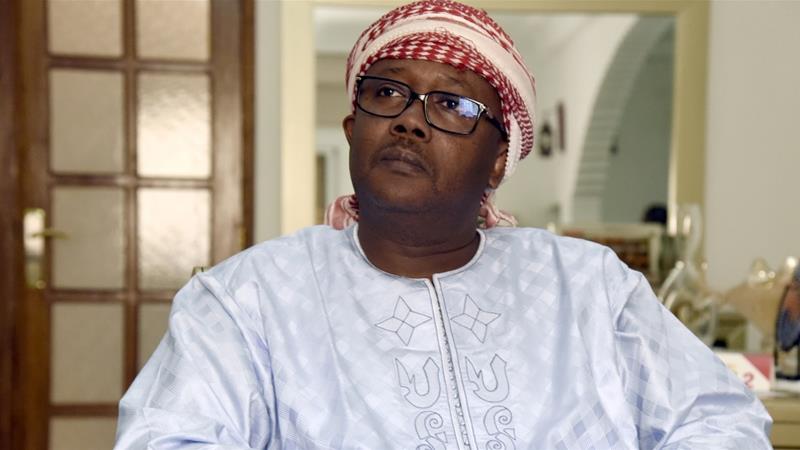
Guinea-Bissau President, Umaro Sissoco Embalo

By Alberto Dabo, BISSAU Guinea-Bissau

Guinea-Bissau President, Umaro Sissoco Embalo, has dismissed five government ministers, including the ministers of defence and the interior, according to a decree released on Sunday.

He did not state the reason for the dismissal of the ministers, who are all members of Embalo’s MADEM-15 party or parties loyal to the president.

The move heightens the political uncertainty in the tiny West African nation, where Embalo’s declared electoral win after a December vote has been contested by runner-up Domingos Simoes Pereira and his powerful PAIGC party.

“It is a strategy for Umaro Sissoco Embalo to gain the majority at the parliament,” pro-PAIGC website Ditadura de Consenso said in an online analysis following the release of the decree.

The ministers’ dismissal comes ahead of a parliamentary session on Monday, when lawmakers are expected to debate which political alliances have the right to govern the country.

The post-election turmoil has dashed hopes that the vote would end years of institutional chaos.

Former president Jose Mario Vaz cycled through seven prime ministers in five years amid a dispute with the PAIGC, which controlled the most seats in parliament.

Sunday, June 28, 2020

Kenya to lift Nairobi and Mombasa lockdown

President Uhuru Kenyatta
By Nancy Agutu, NAIROBI Kenya

The government of Kenya will lift Intercounty lockdown in a couple of days, President Uhuru Kenyatta has said.

Uhuru said once the lockdown is lifted, the government will allow domestic flights.

The president spoke during a virtual leader’s forum on US-Africa trade convened by the Corporate Council on Africa (CCA) on Sunday.

"We are going to start domestic flights and this is what we are going to use as our trial over the next couple of days because we are opening up the lockdown of intercounties," he said.

Uhuru said this is what going to set the pace to opening up the skies in readiness for international flights.

"If you don't take precautions, opening up too quickly also has its downside. We are eager to open up but also eager to stay safe and healthy. We are doing everything to ensure we are back in the sky," he added.

While acknowledging that Covid-19 response measures had helped save lives, Uhuru noted that the interventions have led to negative economic effects.

He said the informal sector, tourism and the hotel industry suffered the heaviest burden adding, that his administration had put in place measures to cushion vulnerable communities and businesses from the adverse effects of the pandemic.

The lockdown which was extended on 6th June 2020 for a further 30 days elapses on 6th July 2020.

The National Emergency Response Committee will this week either ease the current measures or tighten to extend them.

This is because the period given to the counties by the President to set up a 300-bed capacity isolation centres is fast coming to an end.

As of Thursday, only 12 counties had met the requirement, with the rest of the counties still racing against time to achieve the target.

The country surpassed the 6,000 caseload on Sunday after 259 new coronavirus cases were reported. 

The number of positive cases now stands at 6,070. – The Star

"I will not rule but serve you" - Swears New Malawi president

By Frank Phiri, LILONGWE Malawi

Malawi’s new president Lazarus Chakwera was sworn in for a five-year term on Sunday, hours after unseating former leader Peter Mutharika in a re-run election.

Chakwera, 65, won 58.57% of the vote in Tuesday’s poll, a dramatic reversal of the result of the original election in May 2019, which was later overturned by the courts.

The repeat vote was regarded by analysts as a test of the ability of African courts to tackle ballot fraud and restrain presidential power.

“To stand before you as president today is an honour. It’s an honour that fills with unspeakable joy and immense gratitude,” Chakwera said in his acceptance speech.

“With your help, we will restore a new generation’s faith in the possibility of having a government that serves, not a government that rules,” he told a cheering crowd dressed in the colours of his own Malawi Congress Party (MCP) and the allied party of Vice President Saulos Chilima.

MCP is Malawi’s founding party and Chakwera’s win brings it back into power after 26 years in opposition.

The judiciary infuriated Mutharika in February by overturning the result of the May 2019 election that had given him a second term, citing irregularities, and ordering a re-run. Mutharika’s disputed win had sparked months of anti-government demonstrations, a rare sight in Malawi.

Mutharika said on Saturday there had been voting irregularities including violence and intimidation against his party’s election monitors, but his complaint was dismissed by the electoral commission.

Critics had accused Mutharika of doing little to tackle corruption.

“Curbing corruption is crucial now more than ever,” said Lauryn Nyasulu, president of the Economics Association of Malawi.

“The government needs to seal all loopholes and use whatever resources available in efforts to rebuild the economy and safeguard the welfare of those that have been heavily affected by the COVID-19 pandemic.” - Africa

Saturday, June 27, 2020

Malawi Opposition Alliance wins election as President decline to concede

BLANTYRE, Malawi

Malawi’s opposition alliance President Elect, Lazarus Chakwera, says his win in the Fresh Presidential Elections is for all Malawians and he considers citizens of the country as his bosses.

Chakwera was speaking to Times Radio shortly after Malawi Electoral Commission (MEC) chairperson Chifundo Kachale announced the Malawi Congress Party leader as the winner of the June 23 Fresh Presidential elections that the outgoing President termed as the worst ever.

He said his win is for all Malawians and he will provide the kind of leadership that encourages everyone at every level to be servants.

Chakwera added that, together with Vice President Elect Saulos Chilima, he will make sure that the struggles that Malawians face are his and Chilima’s struggles as well.

“Together we will do that which we have promised, that is to build a new Malawi that will be good for us all,” said Chakwera.

On the first thing he will do, Chakwera said his government will table a provisional budget for the next three months until his government brings a new 2020/21 budget to Parliament.

“…So that it (the budget) answers to the aspirations of Malawians,” said Chakwera.

Chakwera has won the Fresh Presidential Elections with 2.6 million of the 4.4 million votes cast, representing 58.7 percent of the votes.

He has defeated incumbent President Peter Mutharika of the Democratic Progressive Party who has managed 1.7 million.

Mutharika’s administration tabled  the 2020/21 budget earlier this month but it was yet to be debated in Parliament.

Meanwhile, President Mutharika has claimed that the June 23 Fresh Presidential Elections are the worst ever elections in the history of the country.

The Malawi leader made the claim during a press briefing at Sanjika Palace today.

He said the elections have been affected by irregularities such as the abduction of Democratic Progressive Party (DPP) monitors. Mutharika also claimed that some tally sheets were not signed by authentic DPP monitors.


The Malawi leader made the claim during a press briefing at Sanjika Palace today.He said the elections have been affected by irregularities such as the abduction of Democratic Progressive Party (DPP) monitors. Mutharika also claimed that some tally sheets were not signed by authentic DPP monitors.

Friday, June 26, 2020

South Sudan pays over $9m arrears owed to AU

JUBA South Sudan

South Sudan has paid over $9 million it owes the African Union (AU) in annual membership fee arrears and contributions for regular budget and peace fund.

Last week, the African Union sanctioned South Sudan after the national government in Juba failed to pay its annual obligations.

In an interview with Radio Tamazuj on Thursday, Hakim Edward, Foreign Ministry Spokesman confirmed that the payment had been made.

"I can confirm that the money the government owes the African Union had been cleared. The mount paid to the African Union was over $9 million," said Mr Hakim.

Meanwhile, James Morgan, South Sudan ambassador to Ethiopia and the African Union, confirmed the National Ministry of Finance had settled all arrears on Thursday morning.

"The payment was made. We have paid $9 million in annual membership fee arrears, so I want to tell the public that the issue is done," said James Morgan. "We will participate in the upcoming AU meeting."

South Sudan became the 54th member of the African Union on July 27, 2011.

"No winner yet in Malawi Elections" – Mutharika's running-mate

BLANTYRE, Malawi

President Peter Mutharika’s runningmate in the Fresh Presidential Elections, Atupele Muluzi (pictured), says there is no winner yet in the elections and has faulted the media for declaring one candidate as the winner.

Muluzi was speaking in Blantyre today at a press briefing which he said Mutharika sent him to hold.

He said the Malawi Electoral Commission (MEC) has not yet declared anyone as the winner of the 2020 elections hence people should wait patiently for the commission to announce the outcome.

“We do not have a winner; we do not have a loser. We are calling upon all our supporters and all Malawians to remain peaceful as we wait for the validation process to be completed and to ignore the results are circulating on social media. These are not verified results and they should be ignored,” said Muluzi.

He also faulted the media saying they have attempted to undermine the institution of the MEC by declaring a winner of the elections when the commission is yet to validate the results.

Muluzi further called on parties that feel that they may have won the 2020 elections to avoid placing pressure on the MEC, the Malawi Police and other institutions.

“We are all Malawians and we are looking for a credible result to these elections and the electoral commission is yet to announce the process of elections,” said Muluzi.

He also asked supporters of the UDF/DPP Alliance to maintain peace and continue supporting Mutharika who is the incumbent president.

Malawi held elections on June 23 and unofficial results show that Tonse Alliance candidate Lazarus Chakwera has won the elections.

MEC is expected to announce the results of the election within the next 24 hours.

Congo announces end of Ebola outbreak

Kinshasa, DR CONGO

The second-largest Ebola outbreak on record is over after nearly two years and more than 2,200 deaths, Democratic Republic of Congo said on Thursday, even as a separate flare-up of the virus continued on the other side of the country.

Despite effective vaccines and treatments that dramatically boosted survival rates, the outbreak dragged on as first responders struggled to gain access to virus hotspots in Congo’s restive east.

“Compared to previous outbreaks, this last one was the longest, the most complex and the deadliest,” Health Minister Eteni Longondo told reporters.

Congo has suffered 11 Ebola outbreaks since the virus was discovered near the Ebola River in 1976, more than double any other country.

Its equatorial forests are a natural reservoir for the virus, which causes severe vomiting and diarrhoea and is spread through contact with body fluids.This outbreak saw 3,463 confirmed and probable cases and 2,277 deaths.

“It wasn’t easy and at times it seemed like mission impossible,” said Matshidiso Moeti, the World Health Organization’s Africa regional director.

Even as health officials celebrated the end of one Ebola epidemic, they face another, unrelated one more than 1,000 km (620 miles) away in the western city of Mbandaka.

That outbreak, declared on June 1, has seen up to 24 cases so far, including 13 deaths.

Longondo he said he expected the response there to be easier because it is in a more stable part of the country where a previous epidemic in 2018 was quickly controlled.

In eastern Congo, some community leaders and local residents were suspicious of the response because they believed Ebola did not exist or resented being overlooked by donors.

Treatment centres were attacked by militia fighters who are active near Congo’s borders with Uganda and Rwanda, and by angry local residents.

The largest Ebola outbreak in history occurred in West Africa from 2013-2016. It killed over 11,300 people mostly in Guinea, Liberia and Sierra Leone.

No Mourning For Burundian Refugees As President Nkurunziza Is Buried


By Our Staff Correspondent, BUJUMBURA Burundi

Friday, June 26, Burundians bade farewell to former President Pierre Nkurunziza who passed away on June 8 following a cardiac arrest according to the government. 

The former leader was accorded a state burial in the administrative capital Gitega.

The send-off ceremony took place at Ingoma Stade, where the new President Maj. Gen Evariste Ndayishimiye was sworn-in on June 18. 

The dress code was black and white while special shirts and Tshirts with the pictures of the deceased leader have was given out.

The cortege with Nkurunziza’s body left Bujumbura in the morning and driven to Gitega, some nearly 100km east of the capital.

The funeral ceremonies began with the paying of last respects from his wife, Denise Bucumi Nkurunziza, his children and close associates in an intimate gathering at the hospital in the central city of Karuzi.

“I personally have lost my love, children have lost their parent. I thank God for giving us strength to be standing in these hard times, after suddenly losing someone you love,” Mrs Nkurunziza said in her tribute.

Nkurunziza will be interred in Gitega in a special mausoleum that was built in the two weeks since he died.

The ruling party National Council for the Defense of Democracy – Forces for the Defense of Democracy (CNDD–FDD) youths were mobilised to line up the road and wait for the cortege as it makes the 2-hour journey to the political capital.

However, as the East African country bids farewell to the former leader, who was 55 at the time of his death, Burundian refugees who fled the post-election violence that followed Nkurunziza’s decision to forcefully seek a third in 2015 feel no remorse and have little hope to return home.

Mahama Refugee Camp in Eastern Province.

Emmanuel Nkengurutse, a former Burundian lawmaker now in exile, says that despite the new leadership and the death of Nkurunziza, there is little to celebrate and no hope for refugees who feel that it is not safe enough to return home.

“He is gone, we don’t celebrate death in our culture but again we are not remorseful that he is gone. He is responsible for the problems that made us free our country, even as he goes, he leaves behind a system that will continue his agenda,” Me Nkengurutse told our reporter.

The lawyer and former legislator said that the election of Ndayishimiye, who was part of the establishment, will not change much the status quo because it is still the same CNDD-FDD that remains in power.

“It is the same CNDD-FDD that promotes divisive politics based on ethnicity, the same party that did a power grab through a predetermined election and the same party that murdered people all these years for opposing their agenda,”

“Going by the speech he [Ndayishimiye] made, there is little or no hope for refugees at all. One moment he said that he wants refugees to return and in the same speech he went on to abuse them, using derogatory words. There was nothing to give refugees hope in whatever he said,”

Nkengurutse said that going by Ndayishimiye’s appointments so far, it will be a mere change of guard but the system Nkurunziza built will remain in place, with the same people like Alain-Guillaume Bunyoni, the new Prime Minister, who were pulling the strings in Nkurunziza’s government, already taking up high ranking positions in the new government.

“Bunyoni was instrumental in whatever happened in Nkurunziza’s government. He is the same individual now in the new government, which is why we are not seeing any hope that we will go home soon. There is nothing to give us hope that we will be safe when we go back,”

“The same fears we had while fleeing still remain. The rhetoric in his speech confirms that there was no change,” says Nkengurutse, whose sentiments are shared by Joyeuse Ndikubagenzi who believes that refugees will be hunted when they return home.

“The new President did not make any commitments to disband ‘Imbonerakure’, the youth vigilantes who were involved in the killings in 2015. They are still killing people. They will hunt down returning refugees to punish them,” she says, adding that they will also not be mourning Nkurunziza.

Others like veteran journalist Alexandre Niyungeko also don’t expect much to change or give refugees enthusiasm to return home.

However, others like Eloge Willy Kaneza, an Independent International Journalist, believes that Ndayishimiye could rein in some changes.

“I think Evariste Ndayishimiye will make some improvements, yes. But we have to remember that he also belongs to the same system and qualifies himself as Nkurunziza’s heir,”

“But in all, I am convinced he will work so that he may leave his own legacy. As a journalist who knows him for 8 years and who spent some time in his home town and met him in several political events, I think he has the ability and will to listen to people at all levels, this is important for me,” Kaneza says.

Concerning refugees, Kaneza believes it is always a personal matter when it comes to returning home but some people might return and others not.

“I believe some CNDD-FDD members who fled the country after denouncing another mandate for Nkurunziza in 2015 will return but also many of those who saw Nkurunziza as “their personal enemy,” he says, adding that some refugees he interacted with showed the will to return home.

“I am not seeing a massive movement of refugees going back to Burundi in the immediate future but we are likely to see some make up their minds. Even though the new President was the CNDD-FDD chief, he was not the commander in chief of the country,”

“So, I think many will try their luck and go back to their country but in his speech, I think there was nothing new. He had been saying this for many years as the CNDD-FDD secretary-general and many times he was sent in Tanzania, the country that received many Burundian refugees in the region,” Kaneza said.

Kaneza says that Ndayishimiye’s former companions claim that he is peace-loving, hates corruption and injustice, values he believes are sufficient enough for a leader to make good decisions and put the past behind and focus on the future.

However, Nkegurutse says that while Ndayishimiye is known to be more realistic and could initiate a peace process, his powers are limited by a small click of people were pulling the strings even in Nkurunziza’s government.

For many still in exile, there is no point in mourning Nkurunziza, a highly devout Christian, who they accuse of dividing the country further. There are over 60,000 Burundian refugees in Rwanda, majority of them living in Mahama Camp in Eastern Province.