Sunday, September 6, 2020

'Hotel Rwanda' hero was not kidnapped, says President Kagame

KIGALI, Rwanda

Rwandan President Paul Kagame denied on Sunday that his government had kidnapped from abroad Paul Rusesabagina, whose widely acclaimed heroism inspired a Hollywood movie but who has been detained on terrorism and other charges.

FILE PHOTO: Paul Rusesabagina, the man who was hailed a hero in a Hollywood movie about the country's 1994 genocide is detained and paraded in front of media in handcuffs at the headquarters of Rwanda Investigation Bureau in Kigali, Rwanda

At a virtual news conference in the capital, Kigali, Kagame did not say exactly how Rusesabagina had been taken into custody but suggested he had been tricked into travelling to Rwanda before he was arrested.


“It was not the case,” Kagame said, referring to accusations of kidnapping.

“There was no kidnap. There was no any wrongdoing in the process of his getting here. He got here on the basis of what he believed and wanted to do, and he found himself here ... that’s how it happened.”

Kigali announced Rusasebagina’s detention on Aug. 31, parading him before the press in handcuffs.

The country’s criminal investigations agency, the Rwanda Investigation Bureau (RIB), has said Rusesabagina will face charges including terrorism, financing terrorism, arson, kidnap and murder.

The Rwandan government has accused Rusesabagina of having a hand in alleged attacks by National Liberation Front (FLN) rebels in southern Rwanda along the border with Burundi in 2018.

A former hotel manager during Rwanda’s 1994 genocide, Rusesabagina used his job and his connections with the ethnic Hutu elite to protect Tutsis fleeing the slaughter.

His heroism inspired the Oscar-nominated film “Hotel Rwanda,” in which he was played by actor Don Cheadle.

Rusesabagina left Rwanda shortly after the genocide and later acquired Belgian citizenship. He has been living in Texas.

His relatives have accused the Rwandan government of kidnapping him and a daughter has said Rusesabagina last called them while in Dubai, days before Kigali announced his detention.

Rusesabagina has been a strong critic of Kagame’s government, whose credit for returning the country to stability after the genocide and boosting economic growth, has been tainted by accusations of widespread repression.

An official in the United Arab Emirates has told Reuters that Rusesabagina was not kidnapped.

On Thursday, U.S. Assistant Secretary for African Affairs Tibor Nagy tweeted that Washington expected Kigali “to provide humane treatment, adhere to the rule of law and provide a fair and transparent legal process.”

About 800,000 Tutsis and moderate Hutus were killed in 100 days in the central African nation in 1994.

Soldiers of the then-Hutu-led government and ethnic militia allies orchestrated the genocide in which victims were hacked to death with machetes, burned alive or shot.

Wednesday, September 2, 2020

Ambassadors call for impartiality of institutions and authorities in charge of Tanzania elections

By Our Correspondent, DAR ES SALAAM Tanzania

As Tanzania now moves toward October 28 general elections, the heads of mission of 11 donor countries have highlighted the importance of free, fair, credible, and peaceful elections.

Chadema Presidential candidate, Tundu Lissu's rally in Mwanza Tanzania

On October 28th of this year, Tanzania will hold a general election to elect a president and vice-president, members of parliament, and councillors.

In a statement released on September 2, the heads of mission of 11 Embassies and Consulates, called on all stakeholders in the elections to embrace peace and reject violence.

They also urged law enforcement and administration to remain politically-neutral, and to protect all voters, activists, and candidates equally and fully.

“Now that the 2020 electoral campaigns have started, the heads of missions of Belgium, Canada, Denmark, Finland, the Netherlands, Norway, Sweden and Switzerland in Tanzania extend our best wishes to all candidates contesting for the Presidential, Parliamentary and council positions.”  Reads the joint statement issued September 2.

Tanzania Opposition Leader to Run Against President in General Elections |  Voice of America - English
Chadema Presidential candidate, Tundu Lissu

They said that they equally express eager hope and anticipation that the process will see pledges for free and fair elections come true during the 2020 election period.

“We underline our support to the democratic process and the functioning of democratic institutions in Tanzania. We hope that men and women, young and elderly will have equal opportunities to participate throughout the remaining process.” The statement said.

The statement posted on the Norwegian Ambassador to Tanzania, Elisabeth Jacobsen, twitter page read further: Enhanced transparency through means like internal and external observation, broad, free and equitable media coverage, as well as clear and fair adjudication of disputes, will also strengthen the legitimacy of the whole electoral process among Tanzania citizens.”

“We call on all stakeholders to commit to ensuring a secure environment for all contestants, respect for the rule of law and fully impartiality of the institutions and authorities in charge of managing the elections.” The Ambassadors’ statement said.

They said that as representatives of their countries they recall their long standing interest in and support for development and democracy in Tanzania based on long historic and close relationship.

The United States ambassador to Tanzania, Donald Wright said that “I fully agree with this message from some of my fellow Ambassadors to Tanzania. As I have said before, I look forward to seeing fair, transparent, and peaceful elections in Tanzania this year, and will work with all stakeholders to make it happen.”

The High Commission of Canada to Tanzania also posted the same statement to their twitter page.

Last week, some key opposition leaders in Tanzania alleged foul play by ruling Chama Cha Mapinduzi party in collaboration with National Election Commission (NEC) as tensions rise in the run up to the general election.

Tanzania: Opposition cries foul over attacks on leaders as election looms |  Africa | DW | 10.06.2020
Ruling party CCM Presidential candidate, John Magufuli

The main opposition party (CHADEMA) and the ACT-Wazalendo (that has majority support in Zanzibar) said hundreds of their candidates were barred after objections filed by the ruling party and easily accepted by the NEC.

“Our parliamentary candidates and those of ACT-Wazalendo countrywide have been unlawfully disqualified,” Chadema Presidential candidate, Tundu Lissu said in his campaign rally. “There’s no credible democratic election without opposition candidates.”

He said following countrywide mass disqualifications of their parliamentary and civic candidates, he called for peaceful nationwide mass protests to demand immediate and unconditional reinstatement of all disqualified candidates.

Seif Shariff Hamad, the ACT-Wazalendo presidential candidate in the semi-autonomous Indian Ocean archipelago of Zanzibar, told supporters to be prepared for mass action. 

“Enough is enough,” he said of party members being barred from the race.

Kenya ruling party's V-C tears into Deputy President

NAIROBI Kenya

Kenya's ruling party (Jubilee) vice chairman David Murathe(pictured right) has denied that he has a personal issue with Deputy President William Ruto.DP William Ruto and Jubilee vice chairman David Murathe.

The former Gatanga MP, however, said that the DP has been 'tested under probation' and it was established that he is not the right choice to take over from President Uhuru Kenyatta.

According to Murathe, President Uhuru will ensure that the country will be put under safe hands after he completes his term in 2022.

“He (Ruto) has been on probation, he has been tested and during that time they were trying to see if he would take over, but look the jury is out there,” Murathe said during an interview with Citizen TV on Tuesday night.

He went on, “When you are the president, you have an obligation to look around and determine who is the right person to take over from you......when you leave the country in the wrong hands people will blame you.”

Murathe said that like what former President Daniel Arap Moi did in 2002 when he bypassed his then Vice President George Saitoti, Uhuru will be careful about his successor.

"I have no problem with Ruto's candidature. But I don't think he is the right person to succeed President Uhuru given the way he has behaved as deputy President,” he said.

Murathe said the DP has been haunted by several graft allegations, and this does not give him the necessary credentials to inherit the presidency.

“Look at the scandals, the Weston Hotel land, the Ruai public land....when all these things follow you and you shamelessly walk around while you are number two, what will you do when you become number one?” Murathe said.

His statement came even as he was linked to a man at the centre of the Kemsa tender scandal.

Murathe acknowledged knowing the man - William Gachoka - linked to Kilig Ltd, which was allegedly awarded a tender to supply Kemsa with 450,000 personal protective kits.

However, he said, "I have absolutely nothing to do with Kilig..." 

Uganda Auditor General pins 11 ministries

By Frank Kisakye, KAMPALA Uganda

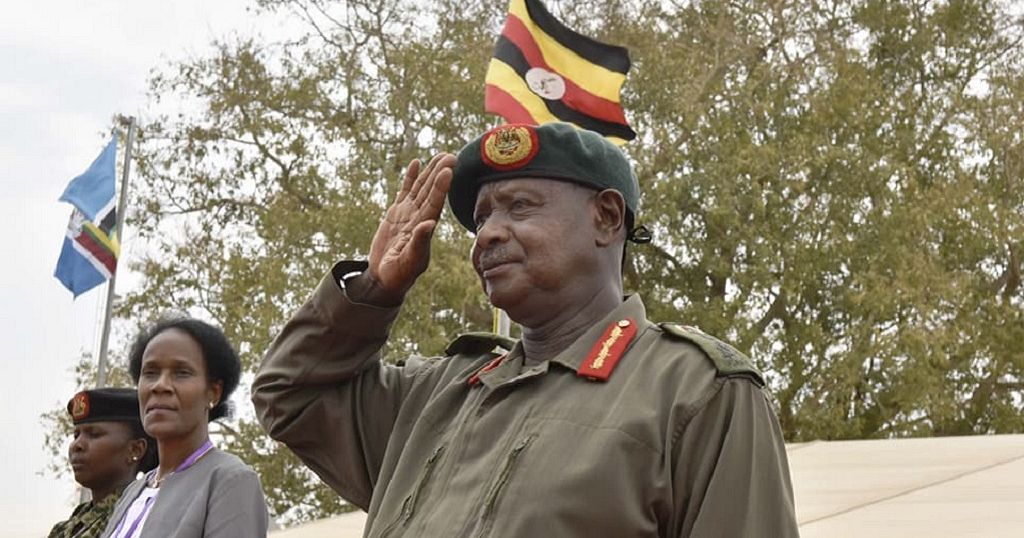
Of the 487 financial audits concluded for ministries, departments and agencies (MDAs), commissions, statutory and state enterprises, projects, districts and municipalities, 433 (89 per cent) had unqualified opinions and 54 (11 per cent had qualified opinions.Uganda's army to register Reserve Force following Museveni's directive |  Africanews

Qualified means qualified for punishment. The agencies qualified for punishment include Uganda National Roads Authority, Judiciary, Uganda Law Reform Commission, Ugandan embassy in China, Mulago national referral hospital, ministry of Health, National Drug Authority, Uganda Cancer Institute, Uganda Heart Institute and Equal Opportunities Commission.

UNRA, according to the Auditor General, diverted up to Shs 341.2 billion from planned activities without authority. The entity also made payments for un-budgeted domestic arrears amounting up to Shs 224.5 billion. UNRA also incurred a nugatory expenditure amounting to Shs 8.1 billion and $800,448 that arose out of penalties for court cases and interest on delayed payments of advances from various contractors.

The Judiciary irregularly diverted Shs 565 million on activities that had not been approved, and a total of Shs 1.2 billion remains unaccounted for as it lacked supporting documents such as acknowledgment receipts.

Also Shs 103 million was diverted from the Justice, Law and Order Sector (JLOS) Sector Wide Approach (SWAP) funds to refund bail claimants’ money that went missing and the money has never been refunded or recovered from the responsible officers.

Judiciary also failed to account for Shs 84 million paid to officers of the registry High court in Kampala. Payment vouchers worth Shs 320 million paid to various officers and companies by the registrar High court during the financial year under review were missing. Another Shs 237 million was ineligibly expensed on the registrar High court.

Ministry of Health made unsupported adjustments relating to domestic arrears amounting to Shs 1.5 billion, overdrafts worth Shs 1.03 billion and bounced EFTs amounting to Shs 313 million. The ministry also mischarged or diverted funds worth Shs 3.1 billion, Shs 2.7 billion was paid out as pension without verification of salary, gratuity and pension files.

Uganda Cancer Institute diverted Shs 497 million off Shs 7 billion allocated to deliver cancer care services to other activities while National Drug Authority failed to utilise funds worth Shs 39 billion from a capital expenditure budget of Shs 41 billion.

Mulago hospital charged Shs 3.2 billion on items that do not reflect the nature of expenditure as defined per government chart of accounts. The Auditor General also faulted the hospital management for collecting only Shs 4 billion against a budgeted revenue target of 13 billion - a 70 per cent underperformance.

Furthermore, the hospital declared only 41 registered ventures as operating on hospital land but a physical count inspection revealed that 145 ventures were on the hospital land and only the less profitable ones were declared. Mulago also fell short on developing performance agreements/targets, failed to develop performance appraisals, failed to monitor staff attendance, and among others.

The Uganda Heart Institute, meanwhile, diverted Shs 579 million earmarked to be spent on planned activities without authority. The Auditor General also observed that the institute had over 270 patients waiting for surgery and patients usually have to wait for up to two years to be operated on. Although the institute makes waivers for various reasons, there is no waiver’s policy to provide guidance on the matter.

The Ugandan embassy in China diverted Shs 654 million without authority from the accountant general and Shs 33 million reported as outstanding advances has taken a long period without recovery from concerned officials. Another Shs 209m remained unaccounted for at the time of the audit.

Uganda Law Reform Commission irregularly diverted and spent Shs 59 million on other activities at code level without the necessary approvals while Shs 1.1 billion was also diverted from programs on which they were budgeted and spent on other programs without authority.  

Equal Opportunities Commission irregularly diverted Shs 783 million without approval, Shs 144 million employer contribution was not remitted to National Social Security Fund. Management also irregularly paid Shs 668 million and Shs 322 million towards duty and consultancy allowances irrespectively.  

The AG’s report noted that various entities charged wrong expenditure codes amounting to a total of Shs 384 billion. This practice, the AG says, leads to financial misreporting and undermines the budgeting process.

A total of Shs 19 billion remained unaccounted for by the time of the audit, contrary to the Public Finance and Accounting Regulations. Judiciary failed to account for Shs 1.2 billion; Uganda embassy in Rome, Shs 206 million, Ugandan embassy in China, Shs 209 million, Ugandan embassy in Ethiopia, Shs 234 million; Kyambogo University, Shs 296 million, ministry of Water and Environment, Shs 136; million; and Uganda National Children’s Authority, Shs 52 million.

“In the absence of proper accountability, the auditor general could not provide assurance as to whether the funds involved were utitlised for the intended purposes.”

The ministry of Finance sought for Shs 1.7 billion supplementary budget from parliament. Parliament approved and appropriated only Shs 615 million but Finance went ahead and spent Shs 1.1 billion.

Maxwell Ongetho from the Auditor General’s Office challenged civil society organisations to make follow-ups on the AG’s report by reaching out to the local communities and make them understand that the reason for poor service delivery was due to theft of public funds.

“We want a comprehensive system on implementation…What we want is this to be reflective on a shared platform; wherever you are you can punch in, check and say this entity of Local Government A in the last five years, these were the issues raised. The Auditor General is saying this has been implemented, this has not been implemented. Then you’re able to go and verify,” he said.

“The civil society has a special role because you’re the lead link between we who write in a professional way, there are standards, there are procedures of the paper and for our work to be appreciated we have to do that. Now you, you understand both our language and also the language of the local people…. Talk about the service missed.” he added.

Ogentho said the accountability government officials and contractors talk about on paper should also be reflective on the ground. He said parliament should ask the questions of paper accountability while civil society ask for tangible accountability. He also said that society should make it scary and embarrassing for officials to steal government money.

“If everything is fine, the two should tally; not engineers attaching receipts but when you go down, there is no borehole. This is like a relay race; if there are four they should all relate with each other…I am not sure there is any technology that will replace the physical reality of what you see on the ground. I don’t see a situation where we have solved all the problems and there is no need for civil society,” Ogentho said. 

Covid-19: How Uganda good fight went wrong

By Frank Kisakye & Carolyne Nakazibwe, KAMPALA Uganda

Praised by the World Health Organisation (WHO) as a model country in the fight against the spread of the novel coronavirus, Uganda is now seemingly headed into the same trajectory as other badly-hit countries, if events of the last few weeks are any indicator.

Interviews with Covid-19 patients, their relatives and medical experts, help explain how the country’s rather good fight got off its rails. From March 18, when President Yoweri Museveni announced a total lockdown, all appeared to be going well. Cases were few, recoveries impressively high and the country began to open up.

Compliance with standard operating procedures (SOPs) especially washing hands and social distancing was religiously adhered to. The fear of contracting the disease stood between 70 and 80 per cent between March and May, according to survey results from the ministry of Health.

In June, that figure dropped to between 30 and 40 per cent and could be lower today. At the end of July, WHO regional director for Africa Dr Matshidiso Moeti praised Uganda, Seychelles and Mauritius for effectively managing to control the spread of the pandemic on the continent.

Ministry of Health permanent secretary Dr Diana Atwine even chastised Tanzania’s seeming laxity in fighting Covid-19, adding that the entire world was looking up to Uganda’s exemplary and success story.

On June 25, when the country had 848 cumulative cases, 780 recoveries and no deaths, the president of the Society of Uganda Private Medical Practitioners Dr Lulume Bayiga told a press conference that it was going to be an uphill task to convince Ugandans that the health impact of Covid-19 was as big as projected.

Lulume urged Uganda to emulate Tanzania and Burundi that had not locked down their countries but had kept their economies running amidst the pandemic, in hope for herd immunity (a form of indirect protection from an infectious disease that occurs when a sufficient percentage of the population has become immune either through vaccination or previous infections).

In response, Atwine told Uganda Radio Network (URN) that the perceived normality in Tanzania and Burundi was farfetched because their people were dying, according to intelligence shared between health experts in the region.

“What is there to learn [from Tanzania and Burundi]? Do you know thousands of people who have died just because they don’t share with you? Do you know how many thousands, thousands, we’re not talking about hundreds but thousands of people who have died?” she challenged. “Look at those countries that relaxed, they bought even extra land for graves. Is that what we want?”

But going by the recent trajectory, Uganda is headed for difficult times; hospital beds in Kampala are filling fast, with just 2,600 confirmed cases. SOPs have generally been dropped, and one only has to venture into downtown Kampala’s Kikuubo Lane or Luwum Street, to understand why Kampala Metropolitan is the latest hotspot for the virus.

While taxis were ordered by the president to ferry only eight passengers for social distancing purposes, passengers report that the case is different once the matatus get to the crowded suburbs.

“The taxi conductors are very strict on masks, but when I asked to use the sanitizer at the door, one conductor quipped: ‘eno ya ba traffic! Kozesa eyiyo (this one is kept for traffic checks; use your own)’,” one regular passenger told The Observer.

No wonder the city is seeing an explosion in cases. A patient hospitalized in Mulago with Covid-19 symptoms said on condition of anonymity, that four floors of the newly-refurbished New Mulago complex are operating at full bed capacity.

Health minister Jane Ruth AcengCubicles meant for six beds are now reportedly accommodating between eight and 12 patients. Another patient in Entebbe Grade B hospital said some patients are starting to occupy space in corridors. Also, the recovery rate has dwindled, as symptomatic community cases start reporting to health facilities, unlike the asymptomatic truck drivers who previously recorded themselves dancing in wards.

The Uganda Medical Association proposed that the ministry stops admitting every patient who tests positive, to decongest hospitals, and admit only those with severe symptoms. But Health Minister Jane Ruth Aceng said with the complacency exhibited by Ugandans, it is unlikely that Covid-19 positive Ugandans with mild symptoms can self-isolate for 14 days without interacting with other members of the public.

Interviewed by the New Vision recently, Dr Monica Musenero, the senior presidential advisor on epidemics, said Uganda is fast moving to the stage of uncontrolled transmission, especially in Kampala.

“The bed capacity, especially in Kampala, has been outstripped and that is why we have close to 150 people, who tested positive, being treated at home,” she said.

However, even Aceng’s current admit-all, treat-all method is not foolproof. Two weeks ago, Bettina (name changed on request) took her husband to Lancet Laboratories for a Covid-19 test at Shs 345,000, because he had presented with all the symptoms – including chest pain, fever, loss of sense of smell/taste, headache and difficulty in breathing – for at least five days.

Five days during which the couple went to different hospitals in Kampala and could not secure a test or help. According to Bettina, the couple contacted KCCA for help and were referred to Mengo hospital only to be turned away because there were neither testing kits nor doctors designated for Covid-19, despite the hospital being identified as a testing centre at the time.

As her husband’s health deteriorated, they opted for the expensive private test.

“When he received a positive result the following day, through connections we secured an ambulance to transfer him to Mulago as our car was impounded for fumigation,” Bettina said.

“As soon as the technician gave us the results, he told us to go home and wait for a call from the ministry. Had we not used our connections to deliver my husband to Mulago, the ministry would probably never have called, because he has never received the said call since his positive test.”

“After his admission, I was told to self-isolate for 14 days, and also find my way to Kiswa health centre in Bugolobi for a test, because the Mulago sample collection centre had been closed and reserved for VIPs.”

“Meanwhile, they told me not to use public means to go to Kiswa, but there was no vehicle or ambulance to take me. How was I supposed to get there and go back home?” Bettina said.

That was August 20. By Monday August 31 when The Observer compiled this, Bettina was yet to receive her test results, despite repeated calls to Kiswa.

“One health worker told me on phone they were undergoing health training and there was no one to update me on the results,” she recounted.

Also, no contact tracer has been to Bettina’s neighbours/community, neither has she received a follow-up phone call from health workers as a primary contact to a Covid-19 patient. At Mulago too, her husband reports that no one has asked for his list of contacts!

She is ‘self-isolating’, but ironically has to deliver food and fruits to her husband, after the Mulago patients reportedly protested against the bad food and the administration allowed caretakers to drop off food daily between 10am and 1pm.

The hospital executive director, Dr Byarugaba Baterana told the Public Accounts Committee of Parliament on August 25, the hospital had budgetary shortfalls and needed funding from government to handle Covid-19, instead of dipping into the usual allocated budget.

He disclosed that the hospital was struggling to feed Covid-19 patients, whose appetites are not necessarily affected by Coronavirus. Many on the wards are asymptomatic. The hospital currently has close to 300 Covid-19 admissions and has registered at least four deaths.

Delays in release of the test results is one of the big setbacks in the Covid-19 fight. While Kiswa told Bettina she would get her results within four days, it had been 10 days and counting, when The Observer last checked; the facility had stopped taking her calls.

Other patients have reported similar delays, and with no strict quarantine measures for community cases, the spread is inevitable. The delay in releasing results could also be responsible for the hospital congestion, since a patient is not discharged until they have a negative result.

Minister Aceng has previously said each test takes about five hours to complete. But surprisingly in places like Ghana, the wait time for a Covid-19 PCR (polymerase chain reaction) test result is 30 minutes.

The ministry has religiously updated Ugandans on ‘new’ cases, recoveries and deaths daily, but unknown to most, the results announced daily are from past tests done over several days, announced as and when the laboratories eventually turn them in.

For community cases, Ugandans are trusted to stay in self-isolation until their results come in.

“This entire Covid thing is a mess. I was tested 10 days ago and it is only today that they called to bring me to Mulago. Do they know how many people I have infected? I believe I have actually healed between then and now if indeed I was positive,” a patient who had just been dropped at Mulago from Busia, said.

As the number of samples and occasional shortage of reagents overwhelm laboratories, Covid-19 is spreading from the crowded downtown Kampala to upmarket air-conditioned ministry offices (Ministry of Finance, Planning and Economic Development registered 21 cases), banking halls (Dfcu Lugogo branch), newsrooms (so far, New Vision, NTV, NBS, UBC and Radio Pacis), hospitals, supermarkets, among others. 

“I feel Coronavirus results are only important if they are released within 24 hours or 48 hours. That is when they are important. Apart from that, you’re going to create a trail of contacts that you can’t handle. Maybe the government is enjoying having enough numbers of Covid-19 patients,” said a laboratory technician from one of the Covid-19 contracted labs, in a voice note sent to The Observer on July 29.

Recently the ministry of Health spokesperson Emmanuel Ainebyoona told The Observer that it takes only 48 hours to know one’s results. The facts on the ground state differently. Even Ministry of Finance, Planning and Economic Development staff who were tested between August 19 and 21, received results on August 24. And that was considered fast.

“Sometimes when the results delay, it is due to the running out of reagents or sometimes traffic jam affects movements of medical officers from sample collection centers to testing laboratories,” Ainebyoona told The Observer.

He also said there is a planned rapid assessment that will occur in greater Kampala Metropolitan, Wakiso and Mukono districts like what happened in other high-risk districts.

“We shall be selecting a number of people scattered across in these districts and test them. We shall also do risk basic testing; for example, if premise X has a case, then we test all the occupants and their contacts there,” he says.

Meanwhile, a patient at Mulago said in a phone interview that patients are neither sensitised about proper hygiene, nor supplied with sanitizers. They, however, get one surgical mask per day.

“Patients are also cleaning the washrooms, because most of the cleaners who were doing the job reportedly contracted the disease. Unfortunately, there is no liquid soap or other detergents to help. If patients don’t volunteer to clean the washrooms, they remain dirty all day,” he said.

Perhaps the ministry of Health’s major battle now is against public complacency and skepticism over the seriousness of the pandemic. After reported misuse and theft of Covid-19 funds in some African countries including Kenya, a section of Ugandans still believe there is no pandemic and government is only using the term to collect donations.

Not even public figures such as AIGP Asan Kasingye, businessman Isaac Rucibigango (he was discharged on August 27 after a negative result), Makerere University lecturer Amanda Ngabirano and others, talking about their personal struggles with Covid-19 made much impact.

One Twitter user even responded to Kasingye’s Covid-19 infection announcement that he (the tweep) would not believe Covid-19 exists unless the Police Chief Political Commissar succumbs to the disease, to Kasingye’s chagrin!

The ministry of Health’s fight was dealt further blows when Aceng was captured in an unfortunate video mingling with masses in Lira, without a mask. Several other ministers and politicians have also flouted the SOPs as the election season kicks into high gear, further disenfranchising the doubting Thomases.

It did not help matters when on July 19 the ministry released its daily update that showed more Covid-19 recoveries (1,071) than confirmed cases (1,069). In their explanation on social media that was missed by many, the ministry said the recoveries included Ugandans, non-Ugandans, as well as refugees.

However, foreign confirmed cases had earlier been expunged from the country’s totals on the orders of President Museveni, a development that even led to mini friction with WHO, who said it was against international pandemic practices.

In addition, when the country started recording Covid-19 deaths, affected families took to social media to dispute the ministry’s findings that their people had died of the disease. This only fueled social media allegations of ‘scaremongering’.

Even The Observer, which has consistently been making daily updates on our online platforms on the status of Coronavirus in the country, was falsely accused of colluding with the ministry to steal Covid money.

As cases spike and the country continues to open up with SOPs, the ministry remains faced with the challenge of upholding an image it boasted of earlier this year, which even made Aceng, Atwine, Dr Monica Musenero and other taskforce members adored celebrities. For a short while. - The Observer


Tuesday, September 1, 2020

Kenya's unemployment rate doubles to 10.4% due to COVID-19

NAIROBI, Kenya

The rate of joblessness doubled two months after Kenya reported its first coronavirus in March, rising to 10.4 per cent from 5.2 per cent.


The number of those unemployed increased to 4,637,164 between April and June this year compared to 2,329,176 same period last year.

It was also higher than the 4.7 per cent registered in the same quarter of 2019.

The number of people in active employment shrunk to 15,870,357 compared to 17,790,800 in the corresponding quarter last year and 17,586,961 in the first three months of the year.

According to the quarter two Labour Force Report by the Kenya National Bureau of Statistics (KNBS), the level of unemployment rose sharply amongst young people aged 20 to 29 years as employers rushed to cut operational costs.

The level of unemployment in this segment, job entrant level rose by 20 per cent, highest on the record.

The same age group also had the highest increase of over 10 per cent each in unemployment over the three months reference period.

The labour force participation rate in the quarter under review stood at 64.4 per cent down from 67.9 per cent recorded in the previous quarter, and 69.7 per cent registered in the same quarter a year ago.

As in the previous quarters, persons in the age group 15 – 19 years recorded the lowest participation rate at 25.2 per cent.

The survey revealed that the overall employment to population ratio in the country, for the working-age population was 57.7 per cent in the quarter compared to 64.4 per cent recorded in the first quarter of 2020.

This was a decline of 8.8 per cent from what was recorded in the same quarter in 2019.

DRC Army Confirms Killing Rwandan Rebel Leader

KIGALI, Rwanda

RUD-Urunana an armed terror outfit of Rwandans based in DRC has suffered a huge blow after its leader Col Mpiranya Leo Cyprien was shot dead in an operation conducted by the Congolese Military.

Reports indicate that members of RUD-Urunana were attacked at their base in Makoka, in the territory of Rutshuru in Eastern part of the vast mineral rich country.

Insiders also claim that Col Mpiranya known by his bush name as Kagoma, has recently been in deep disagreement with Col Rugema one of the group leaders.

According to Civil society groups working in this part of Congo, Mpiranya was killed on Friday at midnight in a deadly attack at Binza village.

Col Mpiranya has a family currently living at Mubende district in neighbouring Uganda where RUD-Urunana enjoys massive support and its Ugandan activities coordinated by Sulah Nuwamanya.

According to sources RUD-Urunana was created by Uganda’s intelligence with the specific mission of destabilizing Rwanda under the coordination of Philemon Mateke.Rwandan Rebel Leader Col. Mpiranya Shot Dead In DRC

Last year on the night of October 4, RUD-Urunana carried out an attack in Kinigi, Musanze district, in the Northern Province, which claimed 14 lives and injured 18 people.

Rwandan security forces repulsed the killers, killing nineteen and apprehending five. Three of the commanders who managed to escape withdrew to Uganda.